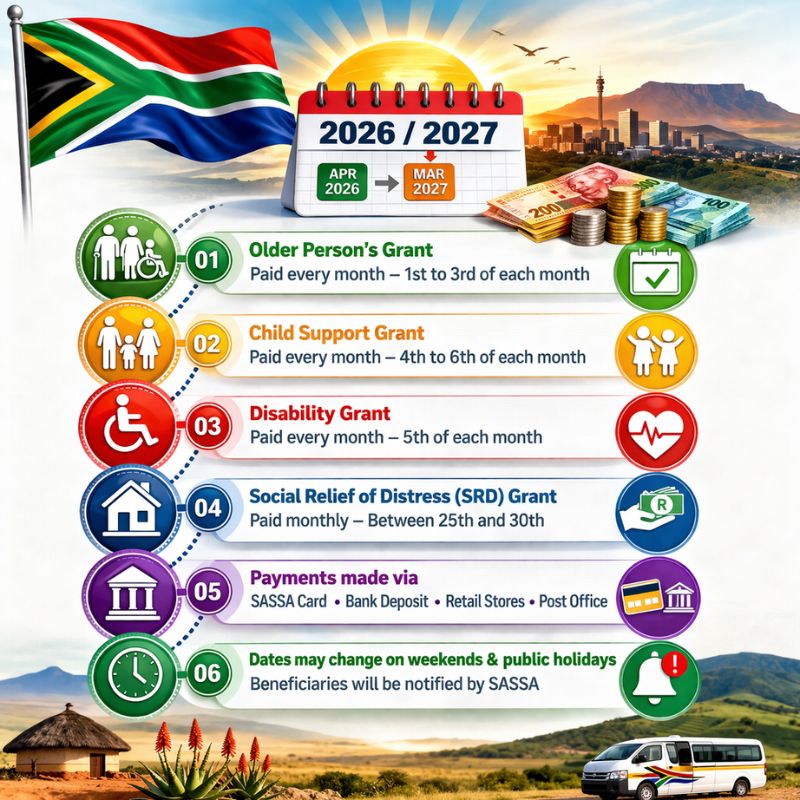
The National Treasury has approved a payment schedule that matches SASSA’s standard method of distributing grants over three days every month. The process typically begins with older persons grants before moving to disability grants and ending with child support grants. This organized approach ensures that all beneficiaries receive their payments efficiently regardless of their circumstances. The system provides clarity about entitlements and prevents confusion that might arise from inconsistent payment dates.
Adjustments are implemented to exclude Mondays and weekends as well as public holidays to maintain smooth operations within the national payment infrastructure. These modifications eliminate potential delays and ensure that disbursements occur on regular business days to reduce the likelihood of beneficiary confusion or frustration. Effective scheduling and punctual payments are essential for maintaining a dependable social safety net.
Dates for SASSA Payments (2026/2027)
| Month | Date 1 | Date 2 | Date 3 |
|---|---|---|---|
| April 2026 | 02 April | 07 April | 08 April |
| May 2026 | 07 May | 05 May | 06 May |
| June 2026 | 02 June | 03 June | 04 June |
| July 2026 | 02 July | 03 July | 06 July |
| August 2026 | 02 August | 03 August | 04 August |
| September 2026 | 02 September | 03 September | 04 September |
| October 2026 | 02 October | 05 October | 06 October |
| November 2026 | 03 November | 04 November | 05 November |
| December 2026 | 06 December | 07 December | 08 December |
| January 2027 | 06 January | 07 January | 20 January |
| February 2027 | 20 February | 21 February | 22 February |

SASSA has confirmed that when a payment date lands on a weekend or public holiday funds will be deposited on the following business day. This ensures beneficiaries receive their money without delay regardless of the scheduled payment date. The commitment to next-day processing during these situations demonstrates SASSA’s focus on maintaining reliable access to benefits for those who depend on them for daily expenses. Consistent payment timing helps recipients avoid financial stress and plan their budgets effectively.

Starting in April 2026, grants will go up.
Budget Speech Increases Social Grants for South Africans in Need The recent Budget Speech announced increases to several social grants. These increases aim to provide additional financial support to the most vulnerable South Africans so they can afford basic necessities and maintain a dignified standard of living. The government is raising these amounts as part of a broader strategy to strengthen the social safety net & address growing inequality across the country.
- Grants for people with disabilities, older people, and people who need care went up by R80 to R2,400.
- The War Veterans Grant went up by R80 to R2,420.
- R1,290 for the Foster Child Grant, which is R40 more than before.
- Grant-In-Aid and Child Support Grant: went up by R20 to R58
These increases represent progress in making life easier for vulnerable groups in South Africa. The higher amounts will help recipients manage the rising cost of living and other financial challenges. Regular reviews of these grants remain essential to ensure they continue serving their intended purpose. The increases matter greatly to people who rely on these benefits as their primary income source because they provide greater financial security.
The grant increases represent a positive development but require ongoing government monitoring to ensure their effectiveness. Clear and equitable distribution processes are essential to prevent administrative delays or errors. For millions of South Africans relying on these benefits timely and accurate payments directly impact their wellbeing.
SASSA’s social grants form an essential component of South Africa’s welfare infrastructure. These payments provide crucial financial protection for vulnerable populations & serve as an important poverty alleviation tool. Maintaining robust and responsive systems remains critical to ensure continued support for those facing economic hardship.